

Environmental Impact of Art Production: A 2026 Guide
Table of Contents
- Where Art Production Leaves Its Mark on the Planet
- Toxic Solvents, Heavy Metals, and the Chemistry of Art Supplies
- Studio Runoff and Water Contamination: What Goes Down the Drain
- Sustainable Art Materials: What to Look For and What to Avoid
- A Lifecycle Look at Common Mediums: From Pigment Extraction to Disposal
- Tips for Buying Sustainable Home Decor That Actually Reduces Impact
- How Artists Can Cut Carbon Footprint and Studio Waste
- Conclusion
- Frequently Asked Questions
Last Updated: October 2, 2026
Where Art Production Leaves Its Mark on the Planet
The environmental impact of art production rarely shows up in the same conversations as fast fashion or air travel, yet it follows a strikingly similar pattern: resource-intensive inputs, chemical-heavy processes, and disposal problems that most buyers never see. Every tube of paint, stretched canvas, and solvent jug carries a supply chain behind it, and that chain reaches into pigment extraction, petroleum-based binders, and water systems.
Toxic Solvents, Heavy Metals, and the Chemistry of Art Supplies
Traditional art supplies carry a chemistry problem that labels often downplay. Volatile organic compounds (VOCs) in turpentine, mineral spirits, and aerosol fixatives evaporate into studio air and contribute to ground-level ozone formation, which is why the EPA's indoor air quality guidance treats them as a health and environmental concern rather than a nuisance.
Studio Runoff and Water Contamination: What Goes Down the Drain
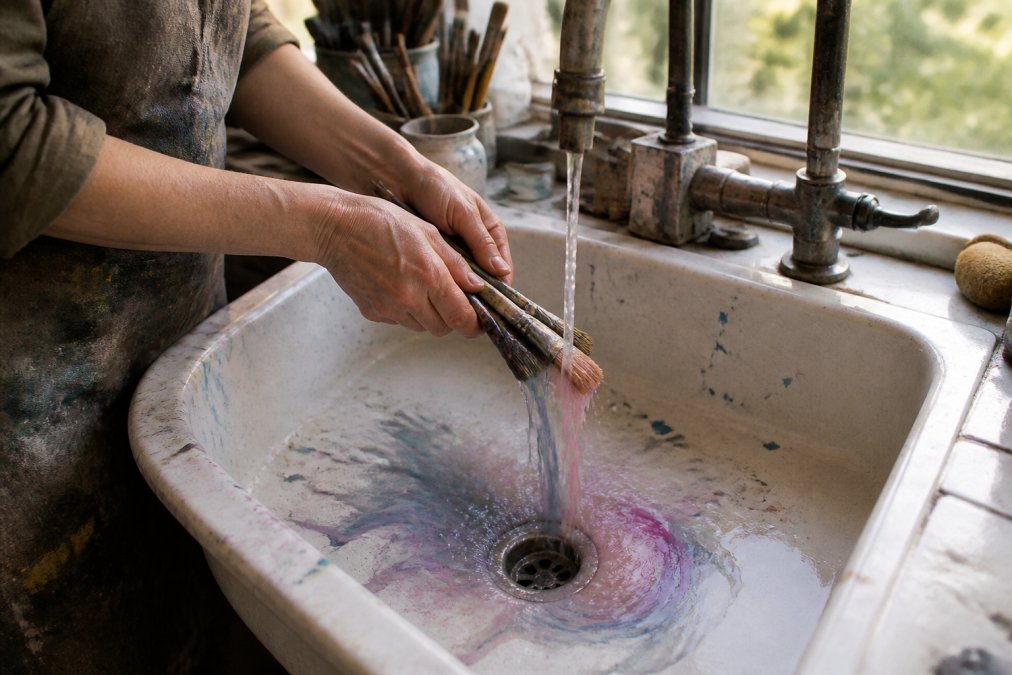
Studio runoff is the most underrated pollution pathway in the art world. Acrylic paint is plastic: once it dries in a drain trap or reaches a river, it doesn't biodegrade, it fragments. Water contamination from acrylics, inks, and metal-based pigments is a genuine municipal wastewater issue, and many treatment plants aren't designed to filter it.
Sustainable Art Materials: What to Look For and What to Avoid
Choosing sustainable art materials comes down to three questions: what's the binder, what's the pigment, and what happens at end of life. Sustainable art materials are those whose production, use, and disposal minimize ecological harm, typically through plant-based binders, non-toxic pigments, and biodegradable or recyclable packaging. The hard part is that "green" labels are largely unregulated in the art-supply aisle, so you have to read the mechanism, not the marketing.
Read the binder first
The binder determines most of a medium's toxicity and disposal profile.
- Solvent-based binders (traditional oils, alkyds, most enamels) require mineral spirits or turpentine for cleanup. Those solvents are VOCs and are the single biggest indoor-air and hazardous-waste issue in a studio.
- Water-based binders (acrylics, watercolor, gouache, water-mixable oils) cut VOC load dramatically, but acrylics trade that win for a plastic problem, the binder is an acrylic polymer that never fully biodegrades.
- Natural and plant-based binders (gum arabic in watercolor, linseed and walnut oil in oils, casein, egg tempera) are the lowest-toxicity options, but they carry their own sourcing questions: linseed and walnut are agricultural inputs with land and water footprints, and some natural resins are harvested unsustainably.
Read the pigment second
Pigment is where heavy metals enter the picture. The pigments to scrutinize are the ones whose names are also elements: cadmium (cadmium red, cadmium yellow), cobalt (cobalt blue, cerulean), lead (lead white, Naples yellow), and chromium (chrome green, chrome yellow). Modern "hue" pigments, labeled cadmium hue, cobalt hue, or with a Pigment Color Index name like PB29 or PR112, replicate the color with organic or synthetic-organic chemistry instead of heavy metals.
What to look for:
- Binders labeled water-based, water-mixable, or solvent-free
- Pigments labeled cadmium-free, lead-free, or "hue" rather than the metal name
- A Pigment Color Index (CI) name on the label, this is the single most useful disclosure on a tube
- FSC-certified or recycled canvas and paper
- Refillable, bulk, or metal-tube packaging over single-use plastic pans and cups
What to avoid:
- Aerosol fixatives and spray varnishes with unlisted propellants
- True cadmium, cobalt, and lead pigments unless you have a disposal protocol (see the studio-waste section below)
- Single-use plastic palettes, cups, and disposable brush cleaners
- "Non-toxic" claims with no CI name, no binder disclosure, and no third-party certification
Certifications worth trusting
Because art-supply green claims are mostly self-policed, lean on third-party marks. The AP (Approved Product) seal from the ACMI certifies that a product is non-toxic when used as intended, and the CL (Cautionary Labeling) seal flags products that require care. Green Seal and UL GREENGUARD Gold cover low-VOC emissions for paints, finishes, and furnishings and are the marks to look for on studio furniture, sealants, and wall paint.
The trade-offs nobody mentions
Every swap has a cost. Water-mixable oils still contain modified oil chemistry and can still be irritating; they reduce solvent use, not eliminate it. Plant-based acrylics often rely on bio-based feedstocks whose agricultural footprint is real. Recycled canvas can have a shorter working life than virgin cotton duck. The honest framing is that sustainable material choice is a series of smaller trade-offs, not a clean switch, and the biggest single lever most artists have is buying less, buying in bulk, and finishing what they already own before replacing it.
A Lifecycle Look at Common Mediums: From Pigment Extraction to Disposal
A lifecycle assessment of common mediums reveals that the biggest impact usually happens before the art exists. Pigment extraction is mining: cadmium, cobalt, and titanium all require energy-intensive extraction and refining. Oil paints add petroleum-derived binders on top of that. Acrylics rely on synthetic binders made from fossil fuels.
Terracotta Echoes - Unique Frameless →
| Medium | Biggest Impact Stage | Disposal Risk | Lower-Impact Swap |
|---|---|---|---|
| Oil paint | Pigment extraction + solvent use | High (heavy metals, VOCs) | Water-mixable oils |
| Acrylic | Synthetic binder production | Medium (microplastics) | Plant-based acrylics |
| Watercolor | Pigment extraction | Low if no heavy metals | Cadmium-free sets |
| Digital | Energy consumption | E-waste | Renewable-powered workflow |
Tips for Buying Sustainable Home Decor That Actually Reduces Impact
The most effective tips for buying sustainable home decor start with one rule: buy fewer, better pieces. Mass-produced decor moves through long, opaque supply chains, and shipping logistics add greenhouse gas emissions on top of material impact. Supply chain transparency matters more than a green label.
When you're evaluating a piece, ask:
- Is the frame sourced from renewable forests?
- Does the seller disclose materials and origin?
- Does the purchase support environmental stewardship?
How Artists Can Cut Carbon Footprint and Studio Waste
Reducing your carbon footprint in the studio is mostly about waste management, energy consumption, and disposal discipline, not sacrifice. Most competitors stop at "use less, recycle more." The practical gap is the how: what actually goes in the trash, what goes to a household hazardous waste facility, and where the energy is really being spent.
Disposal protocols for hazardous studio waste
This is the part most artists never get told, and it's the part that matters most for water and soil contamination.
- Solvents and solvent-laden rags. Mineral spirits, turpentine, and brush cleaners are ignitable hazardous waste. Never pour them down a drain or into a storm sewer. Store spent solvent in a sealed, labeled metal or HDPE container and take it to your municipality's household hazardous waste (HHW) collection event or facility. Many communities run these monthly or quarterly, check your city or county public works or environmental services page for dates and accepted items.
- Oil-soaked rags. Linseed and other drying oils can self-heat and spontaneously combust. Spread them flat to dry outdoors or in a fire-safe area, or store them in a sealed metal can with a lid before disposal. This is a fire-safety rule as much as an environmental one.
- Heavy-metal pigments and paint sludge. Cadmium, cobalt, lead, and chromium pigments should never go down a drain. Wipe brushes on a rag first, then treat the rag and any settled sludge as hazardous waste. If your volume is small, combine it with your solvent run to HHW.
- Acrylic rinse water. Let it settle in a bucket overnight, pour off the clear water (which can usually go down the drain), and dispose of the settled sludge as solid waste, not down the sink. This keeps acrylic polymer out of the wastewater system.
- Aerosol cans and spray fixatives. Empty cans can often be recycled or landfilled per local rules; partially full cans are usually HHW. Don't puncture or incinerate them.
Sustainable studio infrastructure
Materials get the headlines, but the studio itself is where a lot of the ongoing footprint lives. Three systems matter most:
- Lighting. Swapping incandescent and halogen bulbs for LED equivalents cuts lighting energy by roughly 75% for the same brightness and lasts far longer. For task lighting over a palette or easel, look for high-CRI LEDs (90+ CRI) so color judgment stays accurate, this is the one place where the cheap bulb is a false economy for artists.
- Ventilation. A proper studio exhaust, a window fan pulling air outward, or a dedicated spray booth for aerosols, protects your lungs and lets you use lower-toxicity materials more safely. Ventilation is an energy cost, so run it during work sessions, not 24/7, and seal solvent containers when not in use to cut the load it has to clear.
- Heating and cooling. Studios are often in garages, basements, or outbuildings with poor insulation. Air-sealing gaps, adding weatherstripping, and using a programmable or smart thermostat to drop temperature when the studio is empty are low-cost, high-return moves. If you work in a shared building, ask about the utility's time-of-use rates and shift energy-heavy tasks like kiln firing or resin curing to off-peak hours.
The waste-reduction checklist that actually moves the needle
- Switch to water-based or plant-based mediums where the work allows
- Install a settling bucket for all rinse water and a sealed can for solvent waste
- Store solvents in sealed containers to cut VOC evaporation and disposal volume
- Buy pigments in bulk and finish tubes before replacing them
- Reuse canvas stretchers, frames, and panels instead of replacing them
- Track studio energy use and shift work to daylight hours and off-peak rates
- Donate or resell unused supplies rather than binning them, local art schools, community centers, and creative-reuse nonprofits often accept them
A circular economy approach, where materials get reused, resold, and refinished rather than replaced, cuts studio waste faster than any single product swap, and it's the one lever every artist controls regardless of budget.
Conclusion
The environmental impact of art production is real, but it's also manageable with the right protocols. The challenge is that most artists and buyers never get a clear picture of where the damage actually happens, from pigment extraction to studio runoff to shipping logistics. Art By Earth exists to close that gap: our impressionistic nature photography and frameless canvas wall art use ethically sourced radiata pine frames and direct a portion of every purchase to charities protecting the environment.

Frequently Asked Questions
What are the most toxic materials commonly used in art production?
Oil-based paints, solvents like turpentine and mineral spirits, and pigments containing heavy metals such as cadmium, lead, and chromium are among the most toxic. These materials release volatile organic compounds (VOCs) into the air and can contaminate water if not disposed of properly. Acrylics also contain synthetic binders that release microplastics during cleanup. Choosing non-toxic art supplies and water-based alternatives reduces both health risks and environmental harm.
How can artists reduce their carbon footprint in the studio?
Start by switching to sustainable art materials like water-based paints, biodegradable alternatives, and recycled canvases. Install a ventilation system to manage VOCs, and never pour solvents or paint water down the drain. Use rags instead of paper towels, buy pigments in bulk to reduce packaging, and consider energy consumption by using LED lighting. For shipping, consolidate orders and choose recycled packaging. Small changes in studio runoff management and waste management add up over time.
Are there eco-friendly alternatives to traditional oil paints and solvents?
Yes. Water-mixable oil paints eliminate the need for toxic solvents like turpentine. Natural pigments derived from earth and plants offer biodegradable alternatives. For solvents, try citrus-based cleaners or plain soap and water for water-mixable oils. Acrylics labeled as non-toxic still release microplastics, so look for bio-based acrylics made from renewable resources. Always check for third-party certifications and supply chain transparency before buying.
What certifications should eco-conscious art buyers look for?
Look for AP (Approved Product) seals from the ACMI, Green Seal certification, and FSC-certified wood for frames. For home decor, check for GREENGUARD Gold, Global Organic Textile Standard (GOTS) for textiles, and Cradle to Cradle certification. These verify low VOC emissions, sustainable sourcing, and responsible material lifecycle. Brands that publish impact reports or donate to environmental charities also demonstrate accountability beyond a label.