

How to Display Art in Rented Apartments: 2026 Guide
Table of Contents
- How to Hang Pictures Without Nails in Rented Apartments
- How to Hang Heavy Art Without Nails
- How to Display Art Without Hanging It
- Gallery Wall Ideas for Renters
- Removal and Residue Cleanup: Protecting Your Security Deposit
- Frequently Asked Questions
Last Updated: October 9, 2026
How to Hang Pictures Without Nails in Rented Apartments
Learning how to display art in rented apartments starts with one rule: match the hardware to the wall, not the other way around. Damage-free hanging is a skill, and once you learn it, you can decorate any rental without fear.
At Art By Earth, we hear from renters every week who want to bring nature into their space without risking a security deposit. The good news is you have more options than you think.
Here is what most guides get wrong: they treat all walls the same. A painted plaster wall in an older building behaves nothing like fresh drywall. Your method should change with the surface.
Below, we break down every damage-free method, including weight limits, surface prep, and how to remove everything cleanly when you move.
Adhesive Strips and Hooks: Weight Limits and Surface Prep
Adhesive strips are the most common temporary solution, and they work well within their limits. The key is surface preparation and staying under the weight capacity.
Most adhesive hooks list a weight rating on the package. A small hook might hold one pound, while larger strips can handle several. Never guess. Check the label.
Surface prep matters more than the strip itself:
- Wipe the wall with rubbing alcohol
- Let it dry completely (about 60 seconds)
- Press the strip firmly for 30 seconds
- Wait one hour before hanging anything
Skip the alcohol wipe and the strip may fail within days. Dust and kitchen grease are the two biggest reasons adhesive fails.
For heavier pieces, use two or more strips and spread them across the back of the frame. This distributes the load and reduces the chance of a sudden fall.
Picture Rails and Molding Systems
Picture rails are the renter's best friend when your apartment already has them. A picture rail is a strip of molding near the ceiling that lets you hang art with hooks and cord instead of nails.
If your unit has one, use it. Hooks sit on top of the rail, and you adjust the cord length to set the height. No holes, no patching, no stress.
Not every rental has a picture rail. You can add a temporary rail system that mounts with adhesive, but check the weight rating first. These work best for lighter frames.
For molding systems, look at the ceiling trim. Some kits clip onto crown molding and hold a surprising amount of weight. Read the specs before you buy.
How to Hang Heavy Art Without Nails
Hanging heavy art without nails comes down to physics: spread the load across a wide area and use hardware rated for more than the piece weighs. But the part most guides skip is that the wall surface itself sets the real ceiling on what any adhesive can hold.
Start with a weight-to-product guide. Adhesive strips and hooks are rated in pounds, and that rating assumes a clean, smooth, painted surface at room temperature. Here is a rough hierarchy most practitioners use:
- 1-2 lbs: Small adhesive hooks or mini strips. Fine for lightweight prints and small frames.
- 3-5 lbs: Standard adhesive strips, often two per frame. Good for medium framed pieces.
- 6-10 lbs: Heavy-duty strips, four or more per frame, spread across the back. This is the practical upper limit for most adhesive products.
- 10+ lbs: Adhesive alone is risky. Move to a leaning arrangement, a floor easel, or a picture rail if you have one.
Now the surface question, because it changes everything:
- Painted drywall: The best-case surface for adhesive. Smooth, sealed, and predictable. Still clean with rubbing alcohol first.
- Painted plaster: Older plaster can be chalky or crumbly. Adhesive may grip the paint but pull it off on removal. Test in a hidden spot first.
- Brick or concrete: Adhesive barely holds on unpainted masonry. You need a different approach, leaning, a freestanding easel, or a tension-mounted system.
- Textured walls: Orange peel, knockdown, and popcorn finishes reduce contact area. Adhesive ratings drop sharply. Avoid hanging anything heavy here.
- Wallpaper: Never use adhesive strips on wallpaper. The strip will lift the paper, and that counts as damage under most lease agreements.
Here is how we would approach a heavy piece on drywall:
- Weigh the art on a kitchen scale
- Choose strips or hooks rated for double that weight
- Clean the wall with alcohol and let it dry
- Apply four to six strips across the top and bottom of the frame
- Press each one firmly for 30 seconds
- Wait a full hour before hanging
- Test with light pressure before letting go
If you must hang something heavy and your surface is not ideal, consider a floor easel or a leaning arrangement. Both deliver the same visual impact without the weight problem. And if you are set on hanging, a picture rail, if your unit has one, is the only truly damage-free system rated for heavier pieces.

How to Display Art Without Hanging It
Displaying art without hanging it is often the smarter move for renters. Leaning, shelving, and furniture-based setups look deliberate and leave your walls untouched.
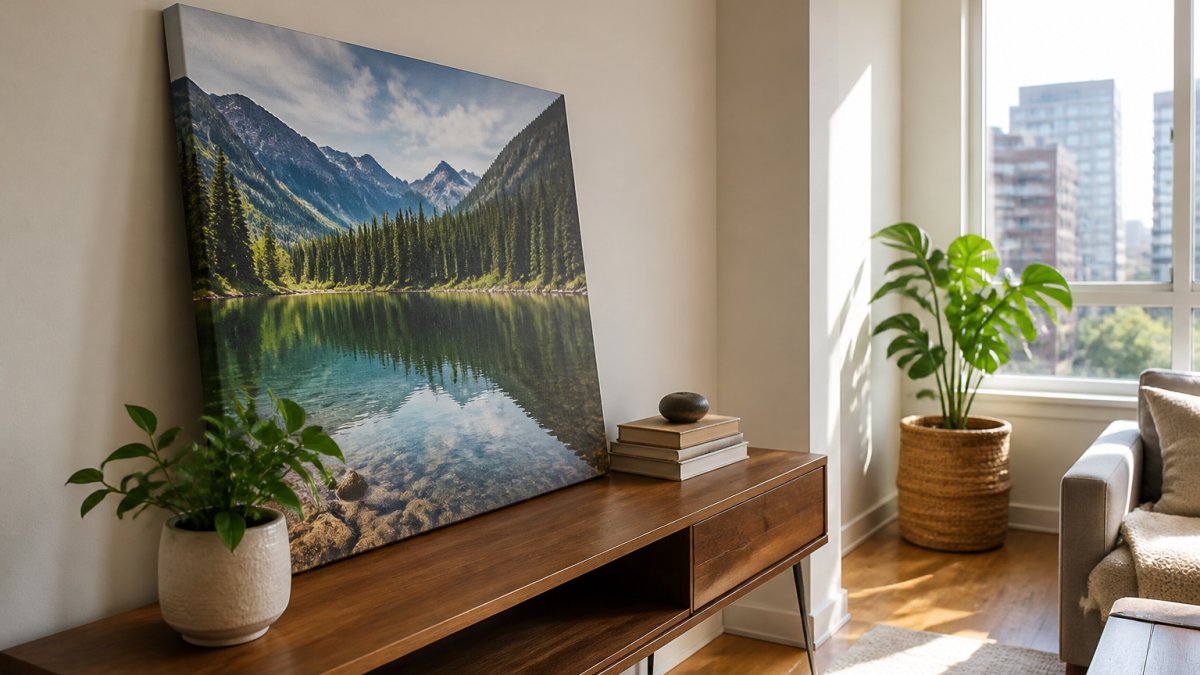
This approach also solves a problem hanging cannot: you can rearrange your display any time you want. No patching, no planning, no commitment.
Picture Ledges and Shelves
Picture ledges are shallow shelves designed to hold framed art at a slight angle. They mount to the wall, but many renter-friendly versions use adhesive or a single small anchor that is easy to patch.
Terracotta Echoes - Unique Frameless Canvas Wall Art →
The advantage is flexibility. Swap pieces in and out whenever the mood strikes. Stack a large print behind a smaller one for depth.
Floating shelves work the same way. Line up three or four small pieces along a single shelf and you get a gallery wall effect with none of the holes.

Leaning Art and Using Existing Furniture
Leaning art against a wall is the simplest non-permanent solution there is. Rest a canvas on a console table, a bookshelf, or directly on the floor.
A few practical notes:
- Lean larger pieces against the wall, smaller ones in front
- Use a rubber dot or felt pad on the bottom corner to stop sliding
- Keep pieces away from direct sun to prevent fading
- Group two or three sizes together for visual weight
Your existing furniture does the work. A dresser, a media console, or even a windowsill becomes a display surface. This is one of the easiest rental hacks for home personalization.
Gallery Wall Ideas for Renters
Gallery wall planning for renters starts with a paper template. Tape paper cutouts to the wall, move them around until the layout feels right, then hang or lean accordingly.
This method lets you test the arrangement without a single hole. It also helps you spot spacing problems before you commit.
Try these layouts:
- Grid: Four to six same-size pieces in even rows
- Salon style: Mixed sizes filling a large area edge to edge
- Linear: One row of pieces at eye level along a hallway
- Shelf-based: All pieces resting on two or three picture ledges
For a nature-inspired gallery wall, mix vertical and horizontal canvases. A tall water scene next to a wide landscape creates rhythm. Add one square piece as an anchor.
If you are worried about commitment, start with three pieces. You can always add more once you see how the arrangement feels in your space.
Removal and Residue Cleanup: Protecting Your Security Deposit
Removing adhesive hardware cleanly is the step most renters rush, and it is the one that costs them money. Slow down here.
Follow this order:
- Hold the frame with one hand
- Pull the tab straight down, slowly, at a steady pace
- Never pull outward or sideways
- If the strip resists, warm it with a hair dryer for 15 seconds
- Peel the strip off the wall at a low angle
- Wipe any residue with a damp cloth and mild soap
Stretching the strip down, not out, is the trick. Pull too fast and the adhesive snaps, leaving a mark.
Check your lease agreement for the specific rules on wall decor. Some landlords allow small nails, others do not. Know your terms before you hang anything.
If a strip does leave residue, a little warm water and dish soap usually lifts it. Avoid harsh solvents, which can dull the paint finish.
Renting should not mean blank walls. With the right method for your surface and a little patience during removal, you can display art in rented apartments without risking your deposit. At Art By Earth, we make frameless canvas prints that lean beautifully, hang light, and bring the calm of the outdoors inside. Every purchase supports charities that protect nature. Start with a piece that fits your space and your lease. Shop All Art and bring the wild indoors.

Frequently Asked Questions
How can I hang art in a rental without damaging the walls?
Use damage-free methods like adhesive strips, picture rails, or tension rods. Adhesive strips work well for lightweight pieces under 3 pounds, while picture rails and molding systems can hold heavier art without holes. Always clean the wall surface with rubbing alcohol before applying adhesive, and follow the weight limits on the packaging. For heavy pieces, consider leaning art on furniture or using a freestanding easel to avoid wall damage entirely.
What is the best way to hang heavy art without nails?
For heavy art in a rental, picture rails and molding systems are the most secure damage-free option. These mount above the wall and use hooks or cords to suspend art, distributing weight across the rail rather than a single point. Alternatively, use heavy-duty adhesive hooks rated for the weight of your piece. Always check the weight capacity and let adhesive cure for 24 hours before hanging.
Do removable adhesive strips damage apartment walls?
When used correctly, removable adhesive strips are designed to leave walls damage-free. The key is surface preparation: wipe the wall with rubbing alcohol, let it dry, and press the strip firmly for 30 seconds. Remove by slowly pulling the tab straight down, not outward. On painted drywall, this method typically avoids paint peeling. On wallpaper or textured surfaces, test a small area first.
How should I arrange artwork on an apartment wall?
Start by planning your gallery wall on the floor or with paper templates. For a balanced look, keep 2 to 3 inches between frames and center the arrangement at eye level, about 57 inches from the floor. Mix horizontal and vertical pieces for visual interest, and anchor the group with one larger piece. Leaning art on a console table or shelf is another renter-friendly option that requires no wall damage.